
3D Printing for the Automotive Industry in Australia
Looking for a 3D printer for car parts, or a supplier who already has one? Forge Labs makes custom car parts 3D printed to order, right here in Australia. If a part is broken, discontinued, or something that simply doesn't exist yet, we can scan it, model it and print it in a material built to survive an Australian summer. From one off classic car parts restoration Australia wide, to short run production for aftermarket brands, our Sydney workshop handles the whole job under one roof.
Typical projects start from $500. Most quotes come back within 4 working hours. Upload CAD, STEP, STL files or send a photo of the part.
Manufactured in
Sydney, Australia · Quality-checked on every job
Quick answer
Yes, 3D printing car parts in Australia works well, and it's often the fastest option available. Automotive 3D printing in Australia is best suited to non structural parts like trims, brackets, housings, clips and mounts, especially when the original part is discontinued or too expensive to source. Load bearing or safety critical parts like brakes, steering and suspension still need traditional manufacturing and engineering sign off.
Why Australian car owners and businesses are turning to 3D printing
Finding a part for an older vehicle in Australia is harder than it should be. Manufacturers stop stocking parts after a few years. Importing from overseas takes weeks and costs a fortune in freight. And a lot of the time, the part you need was never sold here in the first place.
This is exactly the gap that automotive 3D printing in Australia fills. Instead of waiting on a supplier who may not even exist anymore, we build the part from scratch, either from a CAD file you already have or from the broken part itself. No tooling, no minimum order, no overseas shipping. This is what makes replacement car parts 3D printing such a practical option for anyone stuck without a source.
This isn't just for restorers, either. Workshops, 4WD fit out shops, motorsport teams and aftermarket car parts 3D printing brands all use the same process to solve the same problem. They need a part fast, and it doesn't exist anywhere else.
Our Workflow
From broken part to new part, reverse engineering car parts that no longer exist
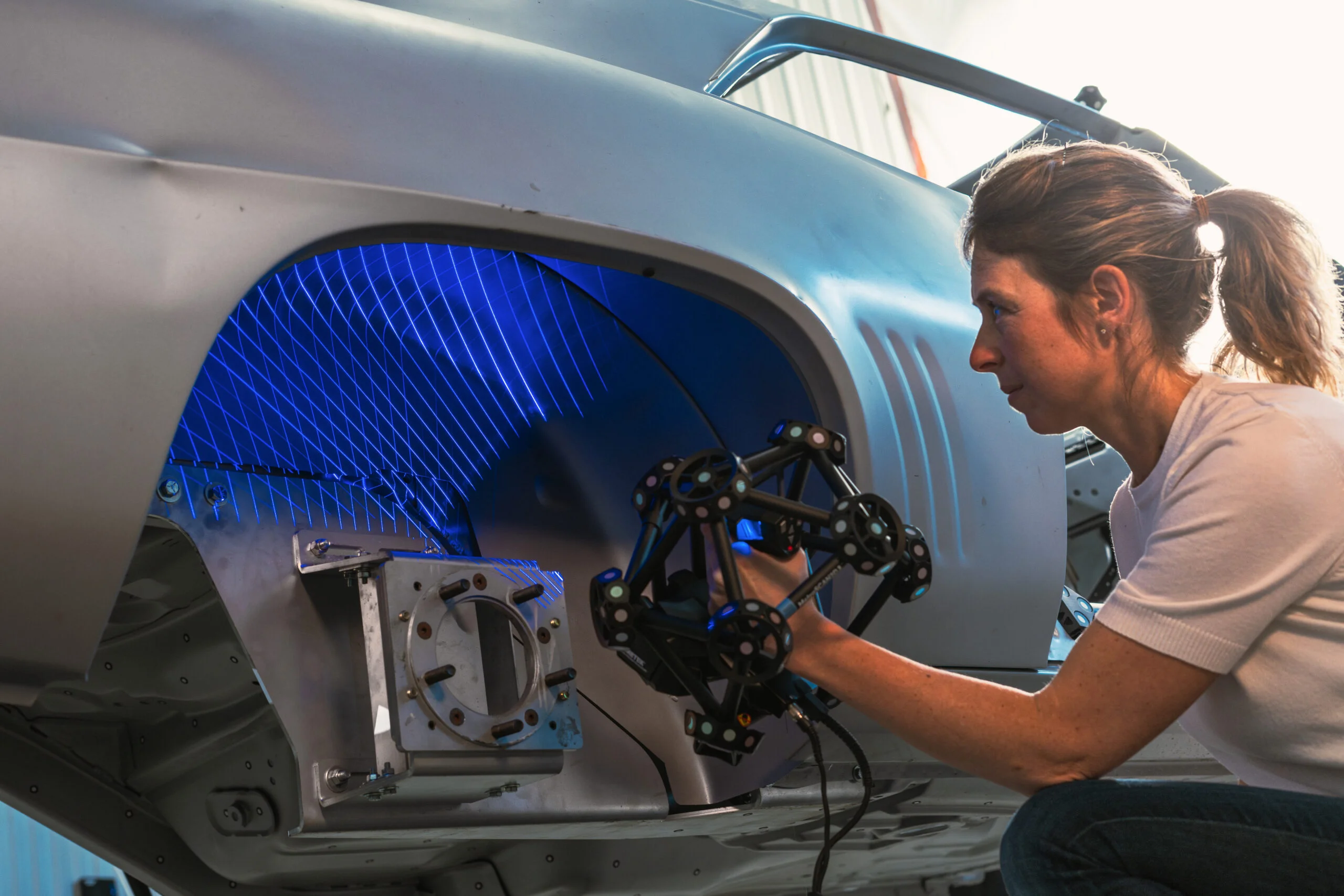
This is where Forge Labs works differently to most 3D printing suppliers. Because we run 3D scanning and 3D printing under one roof, we don't need you to already have a CAD file. We can start from the broken part itself, which is what proper reverse engineering car parts work actually looks like in practice, not just a guess based on photos.
You send us the part
Even if it's cracked, worn or missing a piece, that's fine. Post it to our Sydney workshop or drop it in.
We scan it
Our scanners capture the part to within 0.02 mm, including the geometry that's worn away or broken off.
We rebuild it in CAD
Our engineers turn the scan into a clean, editable model, correcting for wear and damage rather than just copying it.
We print or machine it
Depending on the part, we'll recommend 3D printing, CNC machining or, for higher volumes, injection moulding.
Most suppliers can only do the last step. We can do all four, which means you're not stuck hunting for a CAD file before we can even start.
Materials
Materials that actually hold up in Australian conditions
A lot of guides talk about the best material for 3D printed car parts without mentioning what actually matters on an Australian vehicle, heat, UV and vibration. Here's a straightforward breakdown.
ASA
UV stableFor parts that sit in direct sun or near the engine bay, ASA resists UV far better than standard plastics and won't turn yellow and brittle after a summer on the dash.
ABS and PC-ABS
Interior gradeFor interior trims, clips and housings, these give a good balance of toughness and a clean finish, and they're easy to paint or texturise to match the original part.
Nylon
Flex and vibration resistantFor brackets, mounts and anything that needs to flex without cracking, nylon and glass filled nylon hold up well under vibration and repeated stress.
TPU
Soft touchFor grips, seals and gaskets, TPU gives you the rubber like flexibility those parts need.
SLS and metal
Heat resistantFor engine bay parts exposed to real heat, we move up to SLS or metal 3D printing, options most consumer level guides don't mention because they're written around desktop filament printers, not industrial equipment.
We'll always recommend the material based on where the part sits on the car and what it needs to survive, not just what's cheapest to print.
From rapid prototyping to full production
Not every job stays a one off. If a bracket, housing or accessory turns out to be something you want to sell or fit across a whole fleet, we can scale it up without you needing to find a new supplier.
This matters because most 3D printing suppliers can only take you to step one. We can take a part from a rough idea all the way to a production run, under one point of contact.
Industries we serve
Who we make automotive parts for
Restoration workshops and classic car owners
Interior clips, badges, switch surrounds, dashboard components and trim pieces for Holdens, Fords and imported classics that manufacturers stopped supporting years ago. This is the heart of classic car parts restoration Australia wide, and it's one of the areas where 3D printing genuinely outperforms trying to source an original part.
4WD and off road builders
Custom brackets, mounting plates and storage solutions for accessories that don't exist as an off the shelf part.
Motorsport and performance teams
3D printing for motorsport in Australia comes down to speed. Fast turnaround brackets, ducting, sensor mounts and fitment prototypes, made and delivered quickly enough to matter on a race weekend.
Aftermarket brands and small manufacturers
Short run production of accessories and components, with a clear path to injection moulding once the product proves itself.
Is it legal to 3D print car parts in Australia
Yes, with some limits worth understanding before you start. Australian Design Rules cover vehicle safety, and any part that affects steering, braking, suspension or occupant protection needs proper engineering assessment, not a 3D printed replacement without sign off.
Where 3D printing genuinely shines is in non structural parts, interior trims, dash components, brackets, housings, badges, ducting and covers. These make up the vast majority of what actually needs replacing on an older or modified vehicle, and they carry none of the same risk.
If your project sits closer to the safety critical end, tell us upfront. We'll be straight with you about what we can produce directly and where you'll need an engineer's certification alongside it, rather than staying quiet and letting you find out the hard way.
FAQ
Frequently asked questions
Ready to bring a part back to life
Send us a photo of the part, or upload a CAD file if you already have one. Most quotes come back within 4 working hours.