Prototype Manufacturers in Australia: How to Choose the Right Partner
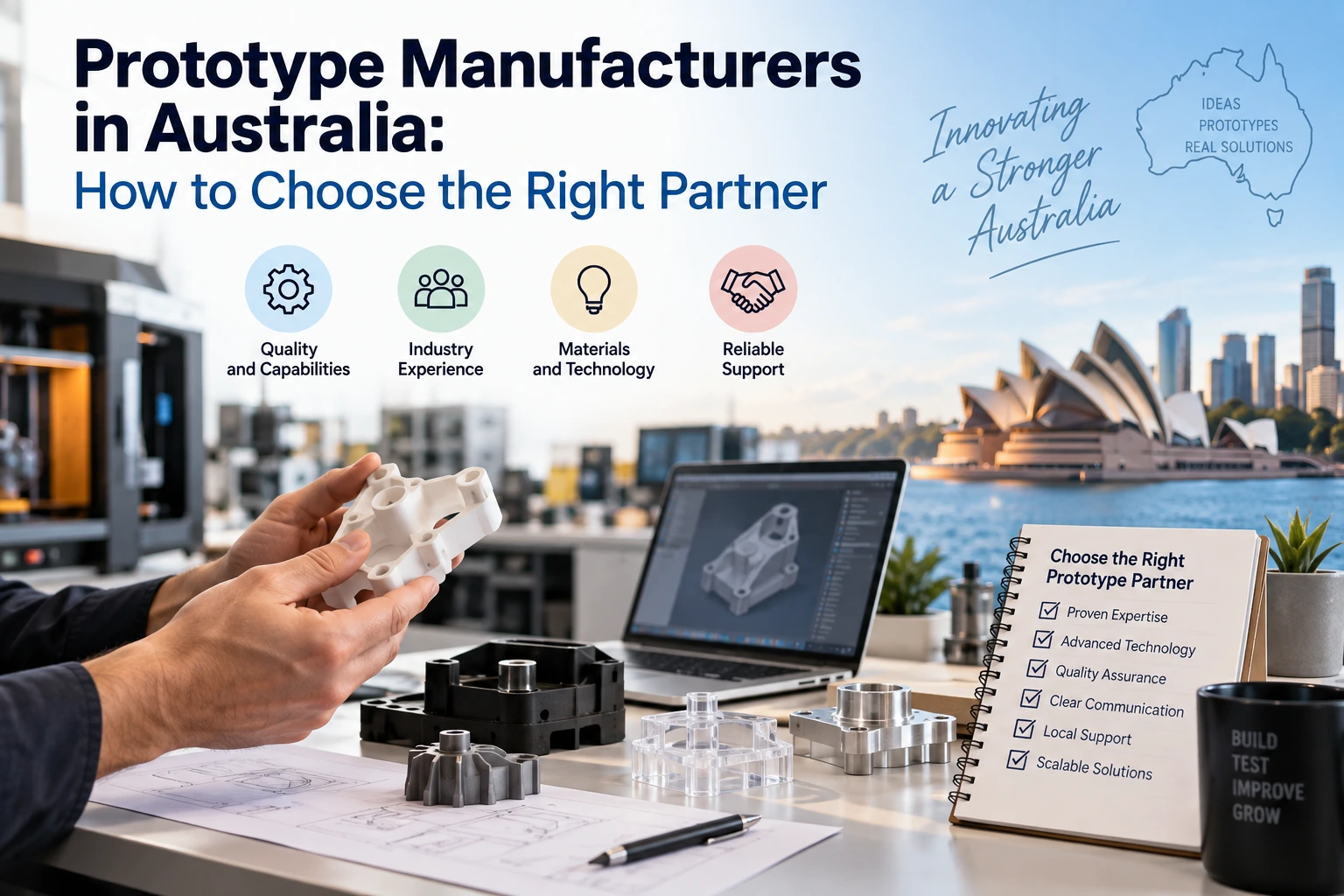
This guide helps anyone searching for a prototype manufacturer in Australia make a confident, informed choice. It covers what a prototype manufacturer actually does, the main technologies available, realistic cost ranges, common red flags, and why the ability to scale into production matters just as much as the first sample. It also explains why working with a local Australian manufacturer usually beats going overseas, especially during the early iteration stage when speed and clear communication matter most.
Summary
This guide helps anyone searching for a prototype manufacturer in Australia make a confident, informed choice. It covers what a prototype manufacturer actually does, the main technologies available, realistic cost ranges, common red flags, and why the ability to scale into production matters just as much as the first sample. It also explains why working with a local Australian manufacturer usually beats going overseas, especially during the early iteration stage when speed and clear communication matter most.
Key takeaways
- Understand your options first. FDM, SLA, SLS, CNC machining, vacuum casting, and injection moulding all suit different needs, budgets, and timelines, so knowing the basics before you call anyone saves confusion.
- Ask for real numbers. A trustworthy manufacturer gives you a realistic cost range and a specific lead time upfront rather than vague answers.
- Watch for red flags early. Refusing to sign an NDA, giving no clear timeline, or pricing that seems too good to be true are all signs worth taking seriously.
- Think beyond the prototype. The manufacturer who nails your first sample is not automatically the right one for production, so ask about scaling before you commit.
- Local usually wins for prototyping. Faster communication, no long freight delays, and stronger IP protection make Australian manufacturers the safer choice during the iteration stage.
Introduction
Getting a product idea turned into something you can hold in your hand is one of the most exciting steps in product development. It is also one of the easiest steps to get wrong if you pick the wrong manufacturing partner. This guide walks you through everything you actually need to know before choosing a prototype manufacturer in Australia, including the questions most guides skip, the costs nobody talks about, and the warning signs that save you time and money.
What does a prototype manufacturer actually do
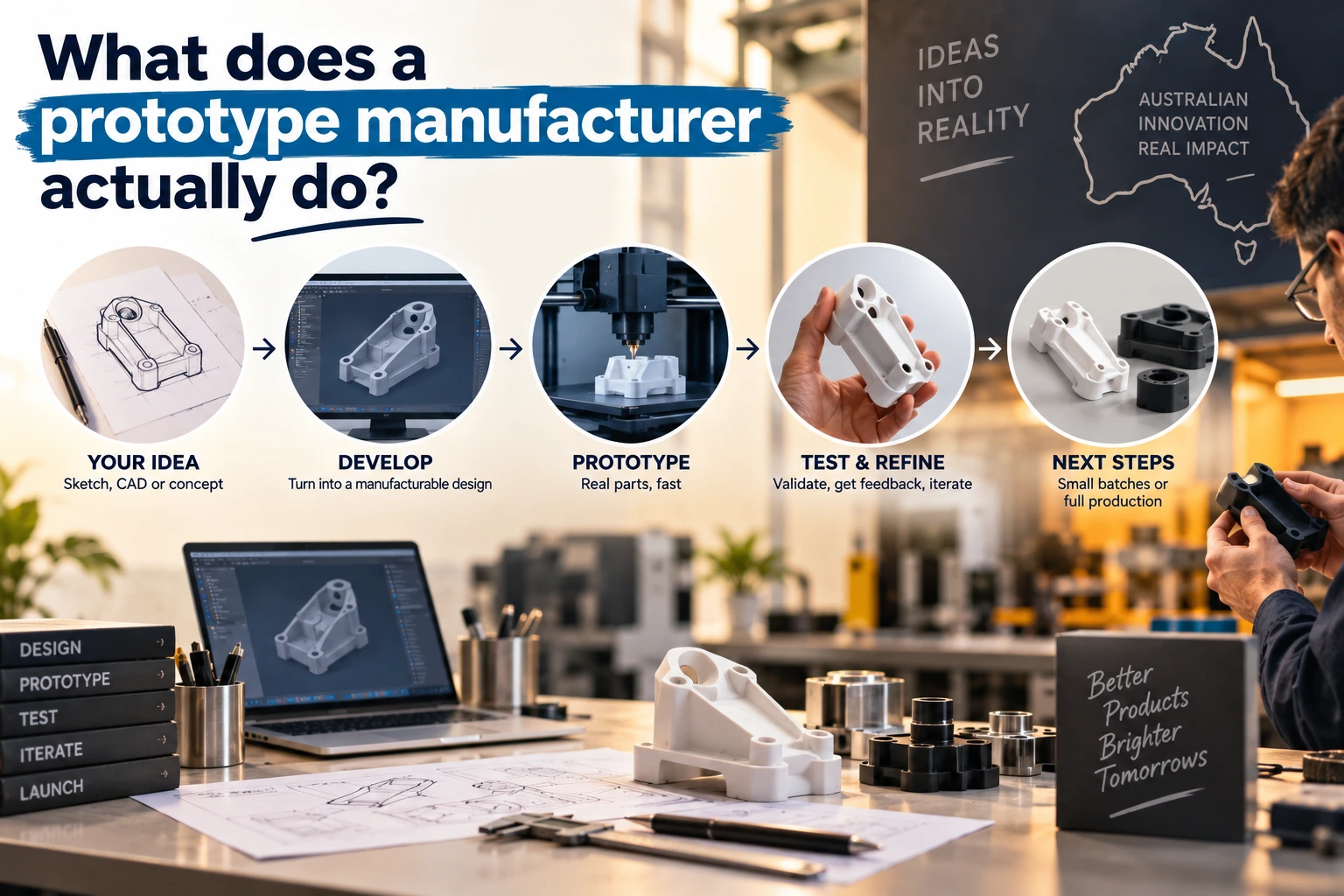
A prototype manufacturer takes your design whether it is a sketch, a CAD file or just an idea in your head and turns it into a physical part you can test show investors or hand to your team. This is different from a design studio, which mostly helps you develop the concept and different from a mass production factory, which is built for volume, than iteration.
A good prototype manufacturer sits in between. They understand design, they understand materials, and they understand how to make small batches quickly without the cost of full production tooling. Some of them, like Forge Labs, can also carry your product forward into small scale or full production once the design is locked in, which matters more than most people realise until they are stuck without that option.
If you are still shaping the idea itself, it helps to work through the basics first. The Australian Government's guide to developing a new product is a useful starting point before you even start calling manufacturers.
The technologies you will come across, explained simply
Every prototype manufacturer in Australia will offer some mix of the following. Understanding these before you start calling manufacturers saves you a lot of back and forth.
| Technology | Best for | Typical cost | Typical turnaround | Watch out for |
|---|---|---|---|---|
| FDM 3D printing | Early concept models, form and fit checks | Low | A few days | Visible layer lines, lower strength |
| SLA 3D printing | Smooth, detailed visual prototypes | Low to moderate | A few days | Parts can be brittle under load |
| SLS 3D printing | Functional parts with complex geometry | Moderate | Under a week | Slightly rough surface finish |
| CNC machining | High accuracy functional parts in metal or plastic | Moderate to high | Around a week | Cost rises with complexity |
| Vacuum casting | Small batches that look and feel like the final product | Moderate | One to two weeks | Not suited to large production runs |
| Injection moulding | Production grade parts once the design is finalised | High upfront, low per part | Several weeks | Tooling cost is a big early investment |
If you want to compare these side by side in more depth, Forge Labs' 3D printing services page breaks down materials and tolerances for each process, and their CNC machining page and injection moulding page cover what each one is actually capable of.
Why most guides to choosing a prototype manufacturer fall short
Here is something worth knowing before you read further. Most articles written on this exact topic either promote one company's own services or give you a generic four step checklist that sounds nice but does not actually help you compare manufacturers side by side. Very few explain real pricing. Almost none warn you about the mistakes that cost people time and money. This guide is built to close those gaps.
How to evaluate a prototype manufacturer properly
Use this as a working checklist when you are talking to potential manufacturers. Go through it point by point rather than judging a company on their website alone.
Equipment and technology range
Ask exactly what machines and processes they run in house. A manufacturer that outsources most of the work adds delays and reduces quality control.
Turnaround time
Ask for a specific number of days, not a vague answer. A manufacturer who gives you a clear timeline upfront is usually more organised and reliable than one who says it depends without offering detail.
Material knowledge
A strong manufacturer will ask what your part needs to do before recommending a material, rather than pushing whatever is cheapest for them to produce.
Feedback on your design
Good manufacturers point out design issues before they build anything. This is called design for manufacture feedback, and it can save you from an expensive reprint.
Communication style
Notice how quickly and clearly they answer your first few questions. This is usually a good preview of what working with them will feel like.
Proof of past work
Ask to see real examples, ideally in your industry or something close to it. Be cautious of a company that only shows stock photos or generic renders.
Ability to scale you into production
This one gets missed constantly. Many manufacturers are excellent at prototypes but cannot carry you into low volume or full production. If scaling matters to you, ask this question early, not after your prototype is finished.
What it actually costs to prototype in Australia
Nobody likes vague answers here, so let's give you real ranges. Costs vary depending on part size, material, and complexity, but as a general guide:
FDM and SLA prototypes for small to medium parts usually start in the low hundreds of dollars per part.
CNC machined prototypes in metal or engineering plastic usually sit in the mid hundreds to low thousands, depending on complexity.
Vacuum cast parts that need to closely resemble the final product usually land in a similar range to CNC, sometimes higher for multiple units.
Injection moulding involves the biggest upfront cost because of tooling, often several thousand dollars before you even get your first part, but the cost per unit drops significantly at volume.
Any manufacturer that refuses to give you even a rough number before seeing your files is not necessarily doing anything wrong, but a manufacturer who can give you a realistic range early on is usually easier and faster to work with.
Red flags to watch for
This is the part most articles on this topic skip entirely, and it is often the most useful section for someone about to spend real money.
Be cautious if a manufacturer will not put a lead time in writing.
Be cautious if they will not sign a non disclosure agreement when your design is genuinely confidential. The Australian Government's guide to non disclosure agreements explains exactly when you should have one in place, and manufacturers are specifically named as one of the parties you should protect yourself with before sharing your idea.
Be cautious if the quote seems unusually low with no explanation, since this often means corners are cut on material quality or finishing.
Be cautious if they cannot explain why they recommend one process over another for your specific part.
Be cautious if they can produce a great prototype but go quiet the moment you ask about scaling into production. This is one of the most common and most costly mistakes people make, choosing a manufacturer purely for prototyping speed and then discovering they cannot support the next stage at all.
Choosing a partner who can take you from prototype to production
This is the single biggest gap in most decision making, and it deserves its own section because of how often it gets overlooked.
Many businesses pick a prototype manufacturer just because it is fast and cheap, for the sample. After the design is checked they find that the prototype manufacturer they chose cannot handle a production run. The prototype manufacturer also cannot keep the quality when making many parts. Moreover the prototype manufacturer does not possess the equipment needed to move from a prototype to injection moulding or CNC production.
If there is any chance you will need volume production later, ask about this upfront. A manufacturer who works across prototyping, low volume production, and full manufacturing under one roof gives you one continuous relationship instead of a messy handover between two different companies who do not fully understand your project history.
What changes depending on your industry
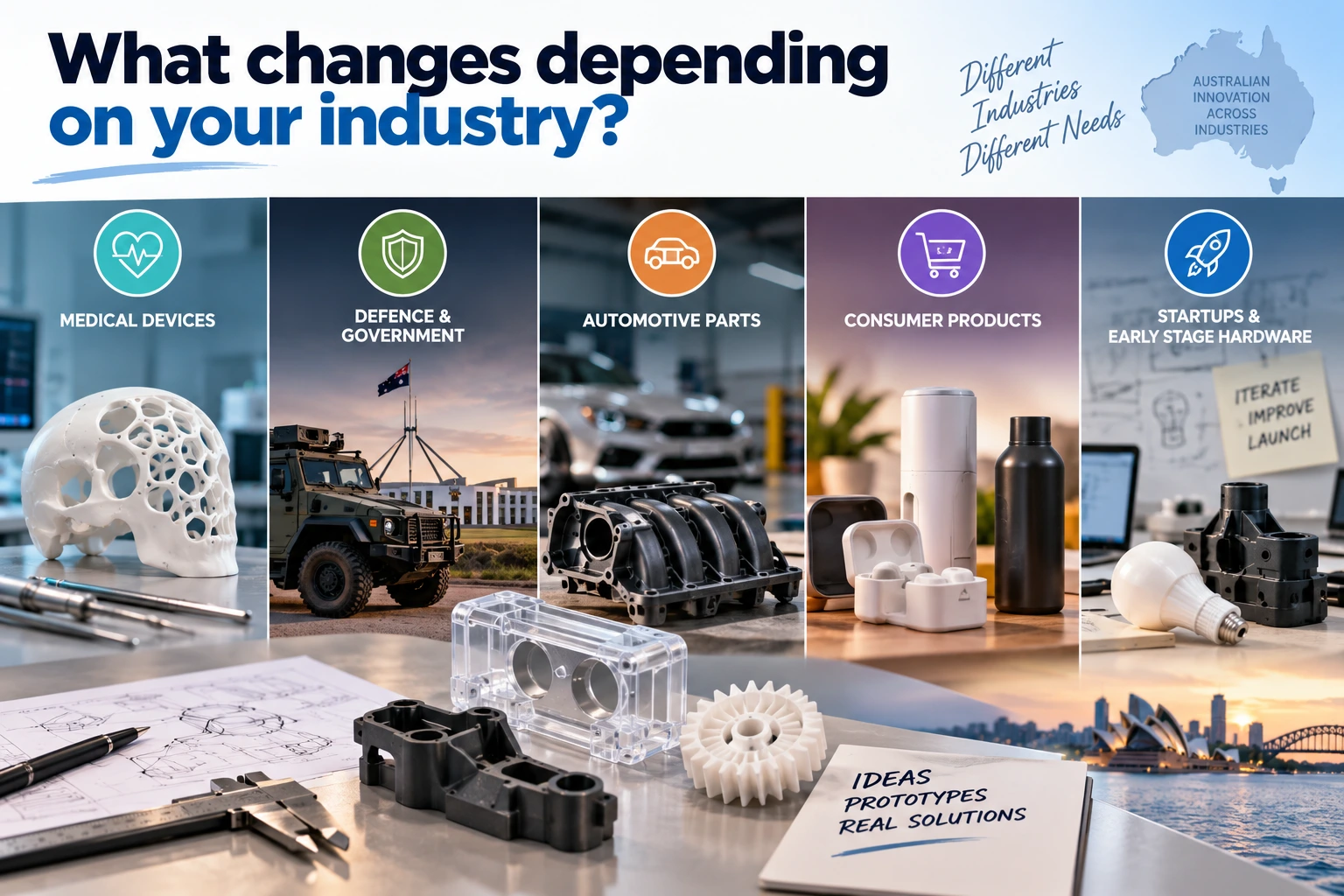
The right questions to ask shift slightly depending on what you are building.
Medical devices
Look for manufacturers who understand documentation, traceability, and material biocompatibility requirements.
Defence and government projects
Confidentiality and secure handling of files matter more here than almost anywhere else. Ask directly about their NDA process and data security. Forge Labs' Canberra service page is a good example of what this kind of security aware engagement should look like in practice.
Automotive parts
Tolerance and material strength usually matter more than surface finish, so ask about their tolerance capability in writing.
Consumer products
Surface finish and how close the prototype looks to the final retail product often matters most, so vacuum casting or SLA may be worth prioritising.
Startups and early stage hardware
Speed and flexibility usually matter more than anything else at this stage, since your design will likely change more than once.
Why choosing a local Australian manufacturer usually wins
It is tempting to look overseas for lower prices, but for prototyping specifically, local manufacturing usually wins on the things that matter most during development.
You get faster back and forth communication in your own time zone.
You avoid long international freight delays that can turn a two week wait into two months.
You get easier confidentiality and IP protection, since your files stay within Australian jurisdiction the whole time.
You can usually visit the workshop or speak to an actual engineer if something needs clarifying, which is far harder with an overseas supplier. Sydney based teams, for example, can book an in person engineering review rather than relying entirely on email back and forth.
For a first prototype especially, where you are likely to make changes quickly, working with a local Australian manufacturer almost always saves more time and money than it costs.
Frequently asked questions
What does it cost to get a prototype made in Australia?
Costs generally range from a few hundred dollars for a simple 3D printed part to several thousand dollars for complex CNC machined or injection moulded prototypes. The exact price depends on material, size, and complexity.
How long does prototyping usually take?
Simple 3D printed prototypes are often ready within a few days. CNC machined or vacuum cast parts usually take about one to two weeks. Injection moulded parts take the longest due to tooling, often several weeks.
Should I use the same manufacturer for both prototyping and production?
It is not required, but it is usually smoother if the manufacturer can support both stages. This avoids the risk of a design working perfectly at prototype stage but failing to translate cleanly into production with a different supplier.
What information does a manufacturer need to give me an accurate quote?
A CAD file or detailed sketch, the material you are considering, the quantity you need, and any specific tolerance or finish requirements. The more detail you provide upfront, the more accurate and faster your quote will be.
Do Australian prototype manufacturers sign non disclosure agreements?
Most established manufacturers will, especially for confidential or commercially sensitive designs. If a manufacturer resists signing an NDA without good reason, treat that as a warning sign.
Final thoughts
Choosing a prototype manufacturer is not just about who can print your part the fastest. It is about finding a partner who understands your material needs, gives you honest feedback on your design, communicates clearly, and can support you as your project grows from a first sample into something ready for the real world. Take the time to ask the right questions upfront, and you will save yourself far more time and money than the extra week of research costs you.
If you want to talk through your project with an actual engineer before committing to anyone, Forge Labs' team is happy to walk through your file, your timeline, and the right process for your part.